Drywall taping and mudding in New Berlin
You did the heavy lifting. Let us handle the part that takes years to get good at.
Get a free estimate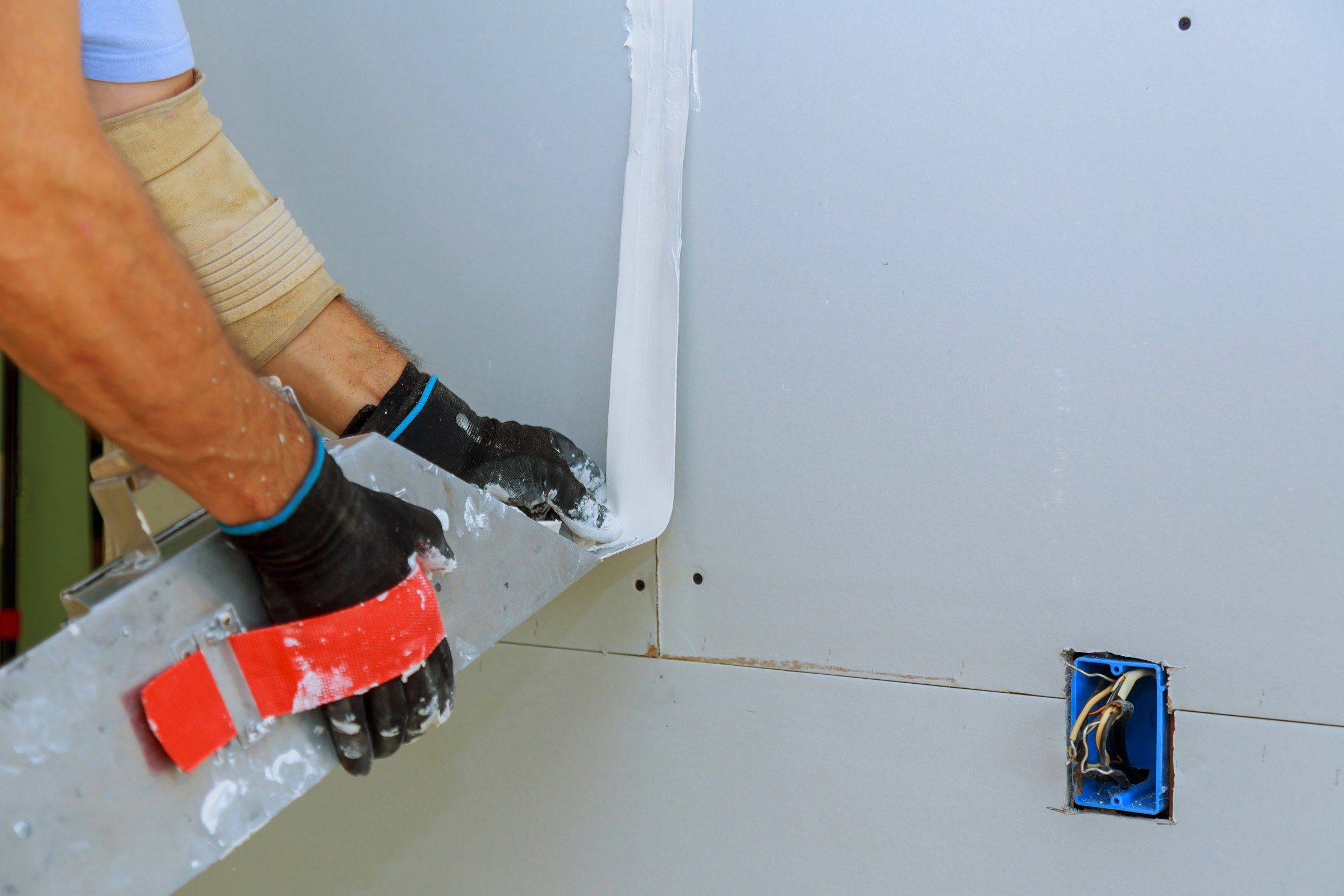
The short version
If your drywall is already hung, we tape the seams, apply three coats of compound and sand it smooth. Most rooms take four to five days because of drying time.
Hanging drywall yourself is a great way to save money on a project. Taping it yourself is how a lot of weekends disappear. It looks easy on video. Then you try it, and there are ridges, bubbles and more sanding than you thought possible.
No shame in tapping out at that point. Plenty of our customers hang their own board and call us for the finishing. It’s a sensible split.
What “taping and mudding” means
“Mud” is joint compound. Every seam between sheets gets a strip of paper tape pressed into mud, then two more coats on top, each wider and thinner. Screw heads and corners get the same treatment.
Done right, the seams vanish and the wall looks like one continuous surface. Done wrong, you can see every joint through the paint. The difference is mostly practice, and this is what we do every week.
Who this is for
DIYers
You hung the basement or garage and want it finished properly.
Remodelers and handymen
Who’d rather sub out the finishing.
Anyone with a stalled project
Board that’s been up, untaped, for longer than you’d like to admit.
People unhappy with a first attempt
We can fix or redo taping that didn’t turn out.
What we’ll do
Check the hanging
Screws too proud? Big gaps? We’ll fix them first.
Tape
Paper tape bedded into every seam and corner.
Second coat
Covers the tape and starts leveling.
Third coat
Thin and wide, feathered to nothing.
Sand
Lightly, with dust collection.
Tips if you’re hanging it yourself
Sink the screws just below the surface without tearing the paper. Keep gaps between sheets under a quarter inch. Use the longest sheets you can manage to cut down on seams. And put the factory-tapered edges together wherever possible.
Do those four things and finishing goes faster, which keeps your cost down. If you’re not sure about something before you start, ask us. We’d rather answer a question than fix a problem.
Why it’s worth hiring out
Seams you can’t see
Even in bright light.
Much less dust
Clean work needs little sanding.
Your weekends back
We’ll have it done in days.
You still saved money
By hanging it yourself.
What makes taping cost more or less
Taping is priced mainly on how much drywall there is. After that, it comes down to how the drywall was hung and how tricky the room is.
If the sheets fit tightly and the screws are set just right, taping goes quickly. If there are wide gaps, screws sticking out, or broken edges, we have to fix those first, and that adds time. It’s not a big deal. We’d just want to know before quoting, so send us a few photos if someone else hung the board.
Height and corners add time too. High ceilings need scaffolding. Every corner, inside or outside, is finished by hand. A plain box of a room is quick. A room with a tray ceiling, archways and lots of windows takes a good deal longer.
I hung it myself. Can you finish it?
Yes, and we do this all the time. Hanging your own drywall is a smart way to save money, and there’s no shame in handing off the finishing. It’s the hardest part to get right.
Before we start, we’ll go over your work and take care of anything that would cause problems later. We add screws where a sheet is loose, sink any that are sticking up, and fill wide gaps with a compound that sets hard. None of that is a criticism. Even professional hangers leave a few things for the taper.
- Press on each sheet. If it moves, it needs another screw.
- Run a wide knife over the screw heads. If it clicks, the screw needs another quarter turn.
- Cut away any loose or torn paper at the edges.
- Put corner bead on the outside corners, or leave it for us.
If you do those four things before we arrive, you’ll save yourself a bit on the bill.
Why it takes several days
People are often surprised that taping a single room takes most of a week. The actual working time isn’t that long. It’s the drying.
Joint compound is mostly water. Each coat needs to dry all the way through before the next goes on. If we rush and put a new coat over a damp one, the moisture gets trapped, and you end up with cracks or bubbles later. So we do a coat, let it dry, and come back.
A normal finish is three coats: one to bed the tape, one to fill, and one to smooth. Then sanding. That’s at least three visits, and usually a day between each.
You can help it along. Keep the heat on at a normal setting. Run a fan to keep the air moving. In a basement or in humid weather, a dehumidifier makes a huge difference. And try not to lean anything against the walls while they’re drying.
A few honest tips
Dust: there will be some, but less than you fear. We seal off the room, cover the vents, and use sanders hooked up to a vacuum wherever we can.
Primer: don’t skip it. Fresh drywall has two different surfaces, paper and compound, and they soak up paint differently. Without primer you’ll see every seam as a slightly different sheen. With it, the wall looks like one even surface.
Lighting: look at the walls in daylight before you paint. If something catches your eye, tell us. It takes a minute to touch up now and a lot longer after the paint is on.
Before and after
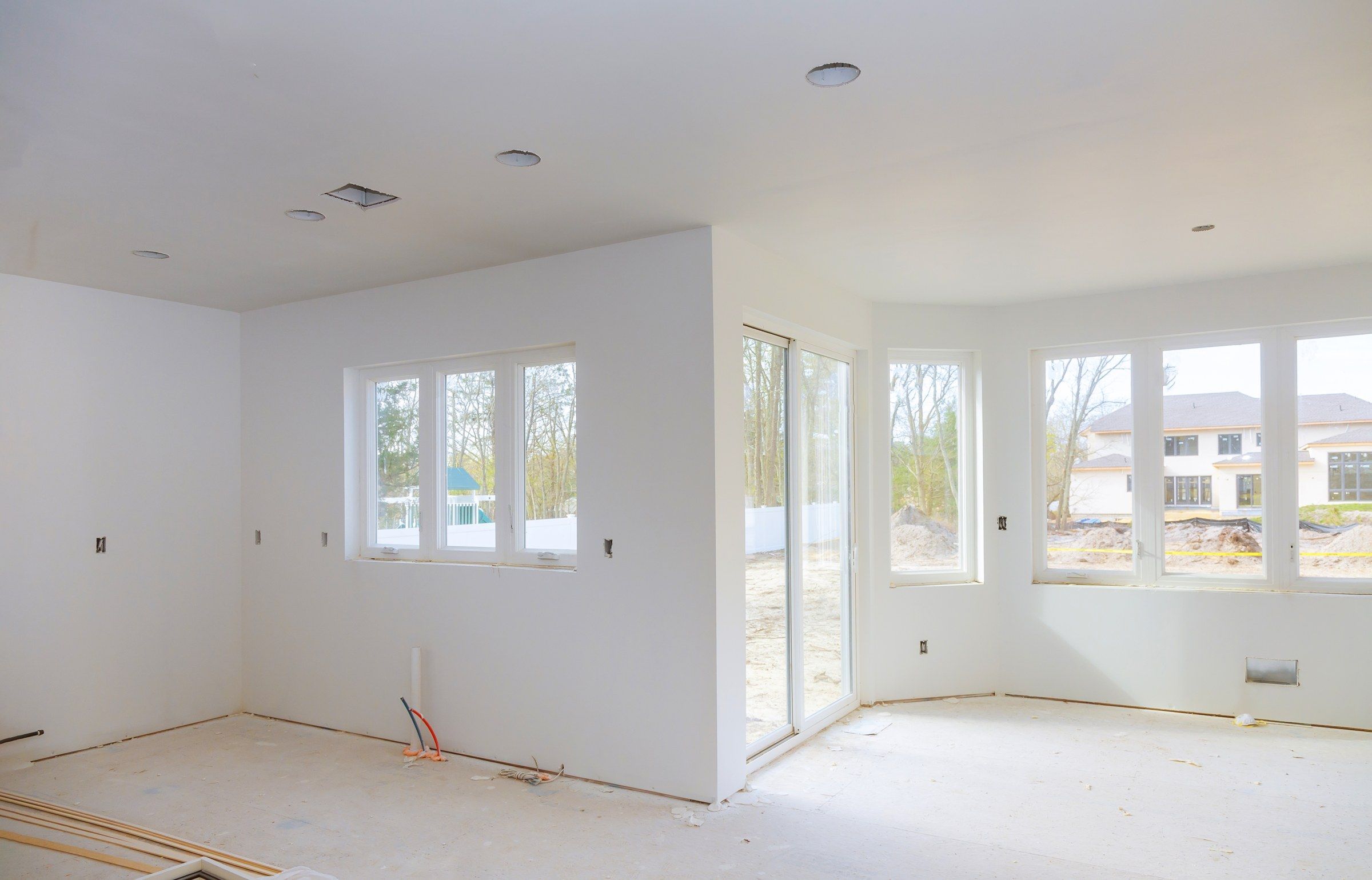
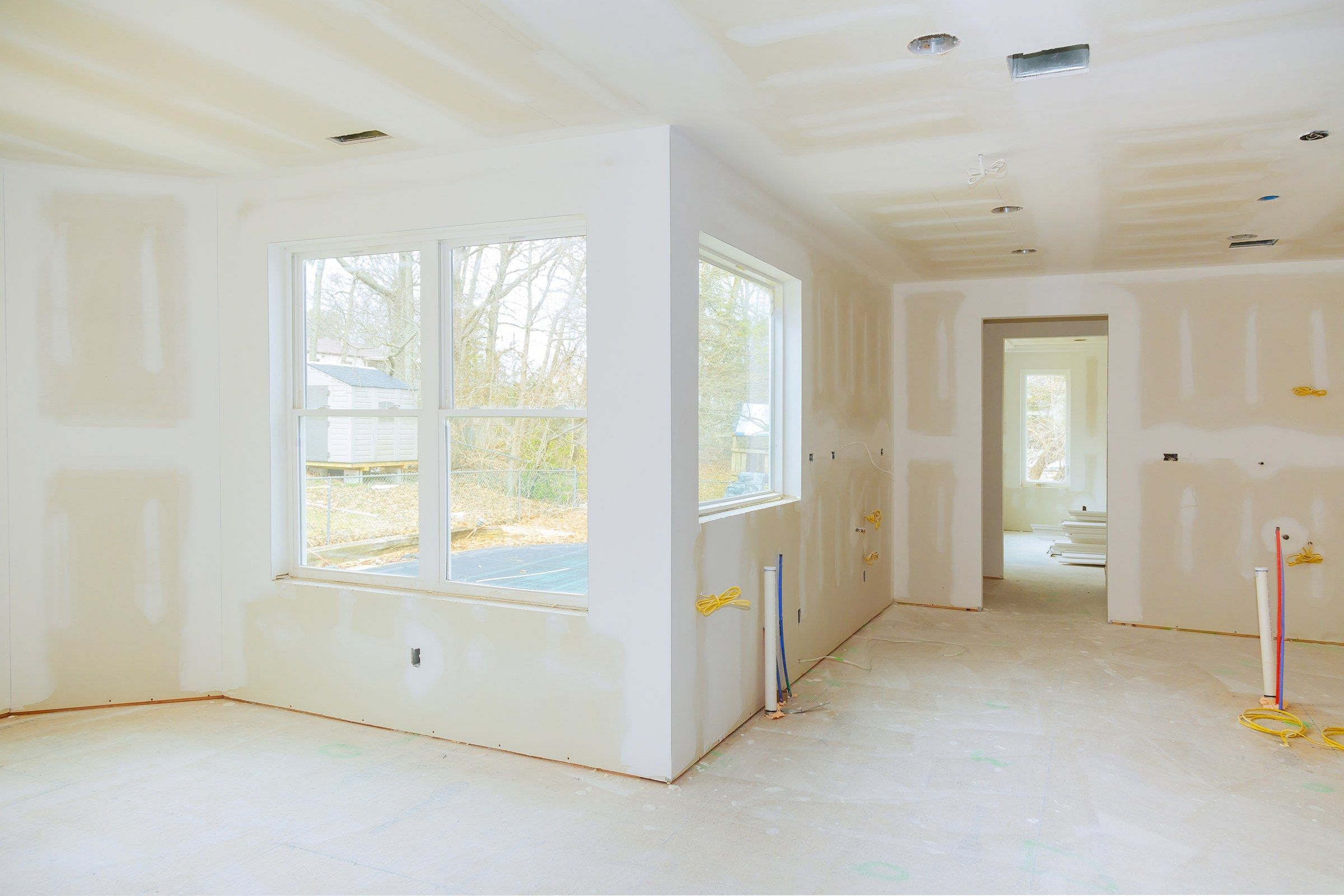
These are stock photos showing the kind of difference this work makes, not one of our own projects.
DIY country
New Berlin has a lot of hands-on homeowners. Bigger lots, bigger garages and bigger basements seem to bring out the project-tackler in people. We’re glad to be the crew that finishes what you started.
One seasonal note: compound won’t cure in a cold garage in January. If that’s your project, we’ll bring heat or plan it for warmer weather.
Good to know
Paper tape or mesh?
We use paper for nearly everything. It’s stronger across the seam and folds neatly into corners. Mesh is fine with fast-setting compound on small repairs, but mesh under regular premixed mud is behind a lot of the cracked seams we’re asked to fix.
What is the difference between taping and finishing?
People use the words loosely. Taping usually means bedding the tape and putting on the first coats. Finishing means the final coats and sanding that make the wall ready for paint. When we quote, we spell out exactly which coats are included so there’s no confusion.
Can you fix bad taping someone else did?
Yes. Bubbled tape gets cut out and redone. Ridges get sanded down and recoated wider. Seams that are too narrow get feathered out. If the walls are already painted, it’s still fixable, and they’ll need primer and paint again afterward.
Do you tape garages and basements too?
We do. Garages often just need a basic taped finish. Basements deserve a good one, since the ceilings are low and the lights are close. Tell us how the space will be used and we’ll suggest the right amount of finishing.
How smooth will it be?
Smooth enough that you can’t find the seams by eye or by hand once it’s primed. That’s the standard we check against with a work light before we pack up.
Your questions about drywall taping and mudding
Will you really finish drywall I hung?
Absolutely. We’ll look it over first and let you know if anything needs fixing before we tape.
What if my hanging isn’t great?
Most issues are easy to correct: a few screws, a gap to fill. We’ll tell you honestly and price it fairly.
Should I buy the materials?
We normally bring our own tape and compound. It’s included in the price.
Can I paint right after?
Once we’ve sanded, prime with a drywall primer and then paint.
How is this priced?
Usually by the amount of drywall, adjusted for ceiling height and how much corner work there is.
You might also need
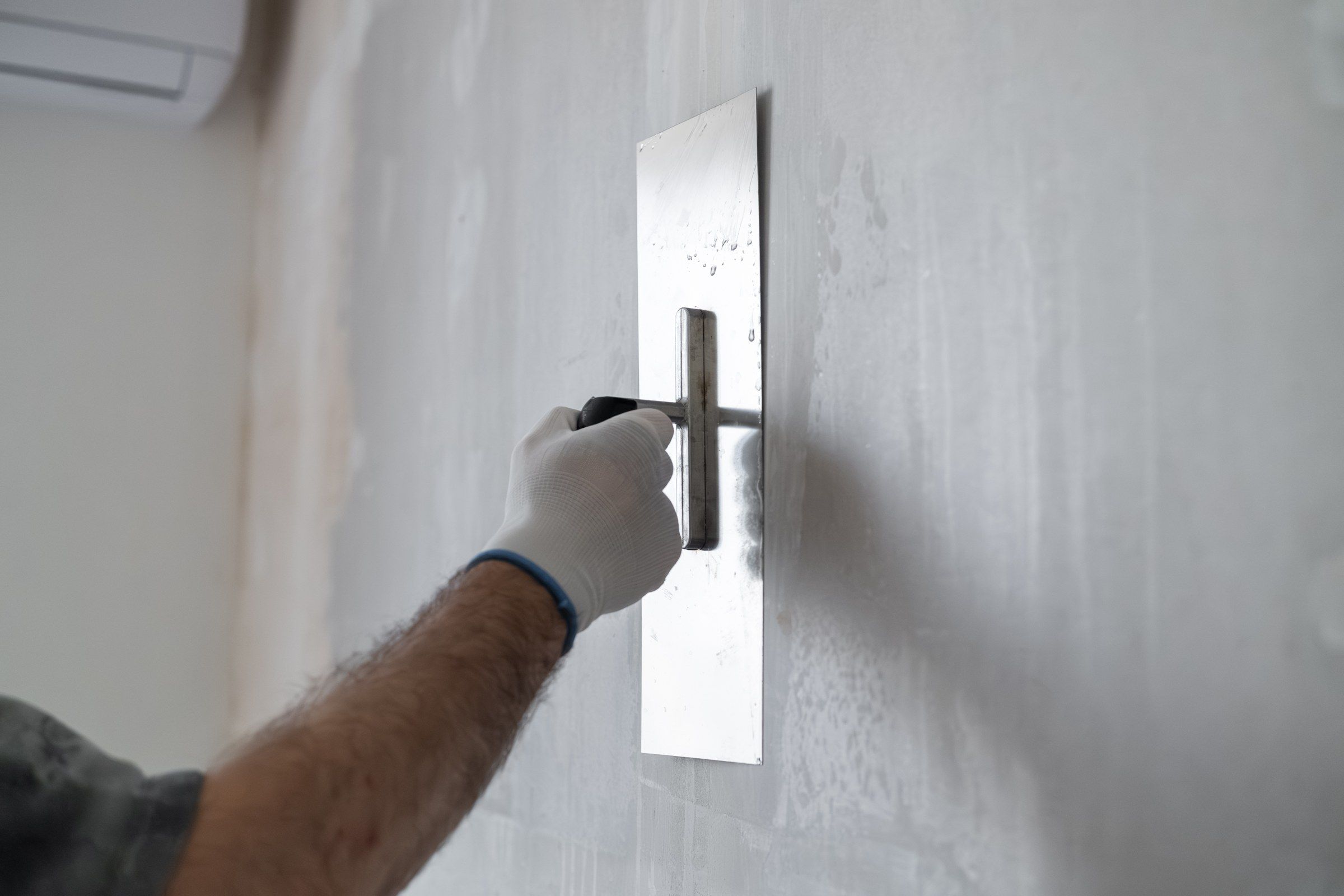
Drywall Finishing
Smooth, paint-ready walls, with the finish level explained in plain English.
Learn more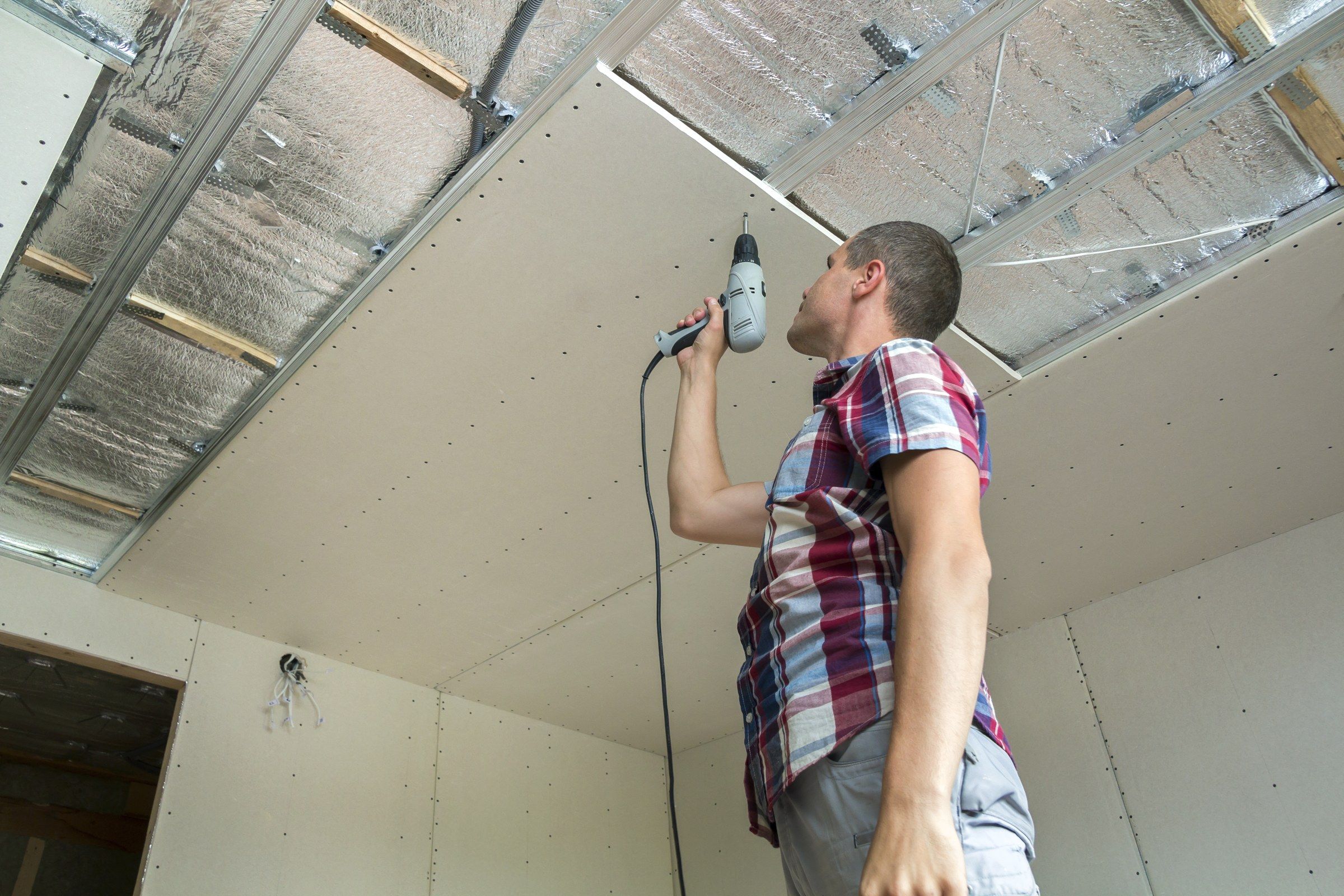
Drywall Installation
New walls and ceilings for additions, remodels and new builds.
Learn more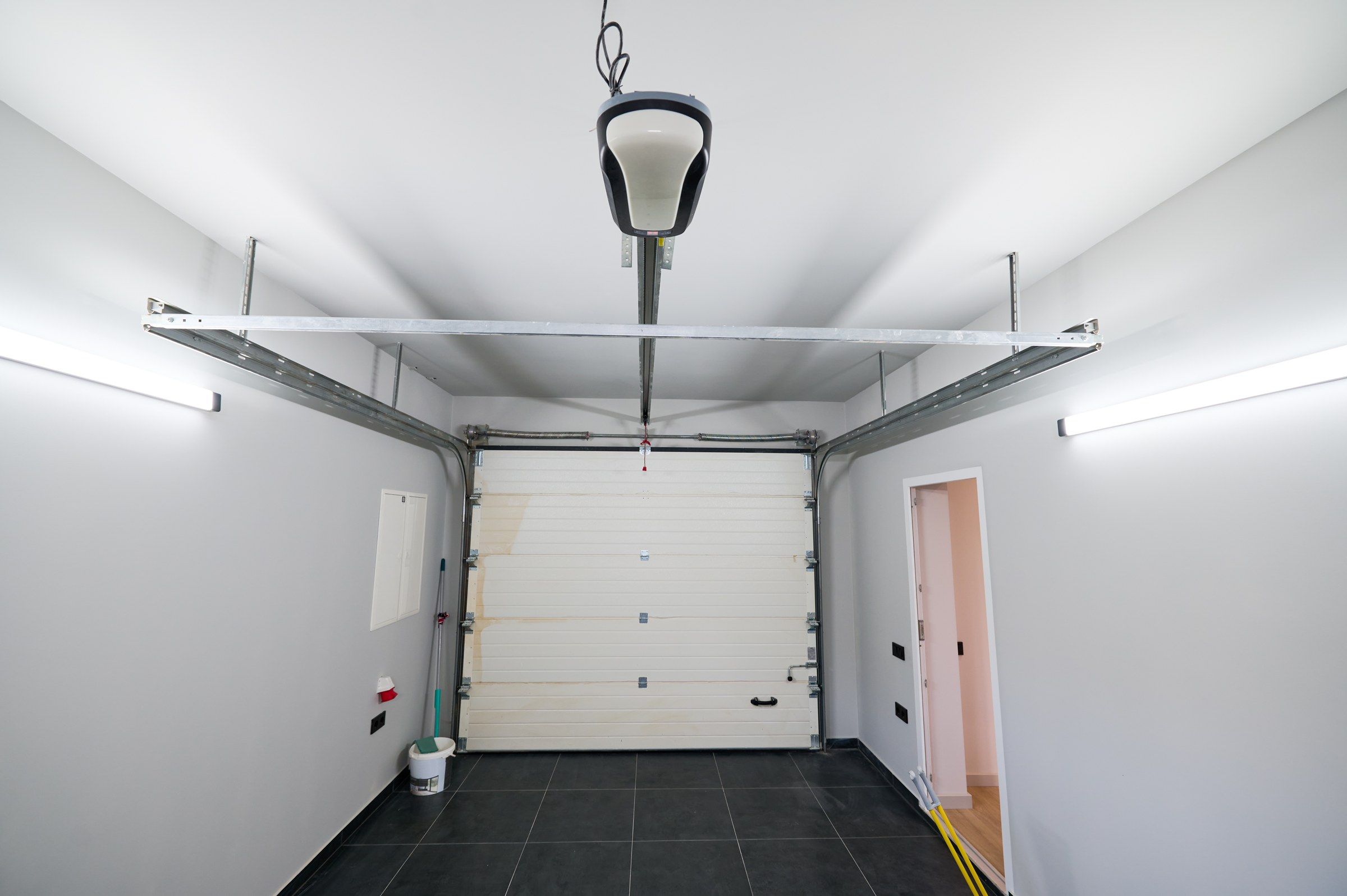
Garage Drywall Installation
Turn bare studs into a bright, clean, usable garage.
Learn more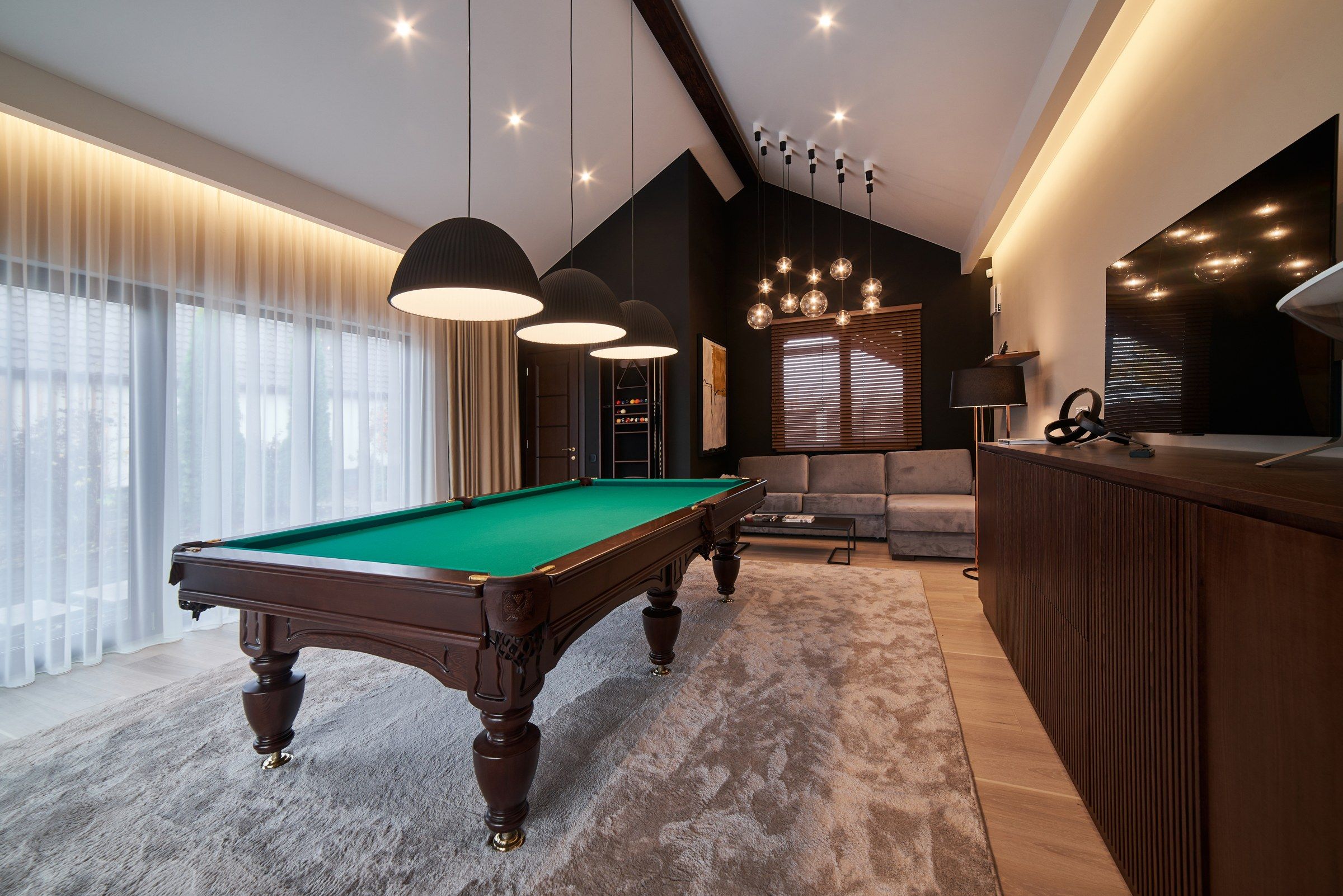
Basement Drywall Installation
The step that turns a framed basement into real rooms.
Learn moreWant a price for this?
Tell us a little about your drywall taping and mudding project in New Berlin and we’ll send a free written estimate.